FIRE Magazine
Blue Sky Offices Shoreham
25 Cecil Pashley Way
Shoreham-by-Sea
West Sussex
BN43 5FF

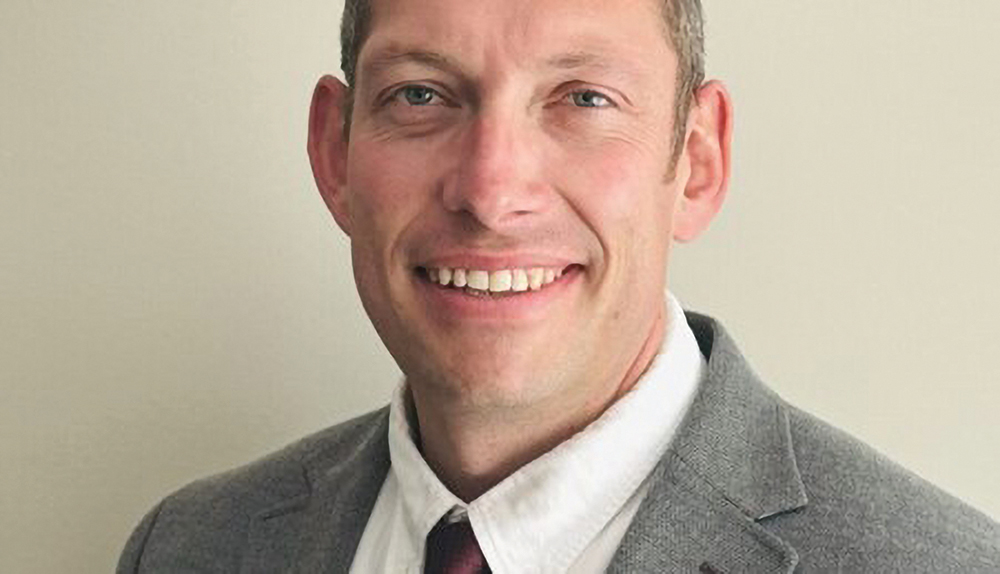
For Steve Wright, firefighting is in the blood. The general secretary of the FBU has been a member of the fire service for 25 years, joining at 18. He followed in his father’s footsteps into the service, and latterly Wright’s own son has become a firefighter too.
When he says “it’s all I’ve known”, you believe him. But it also means he has huge knowledge of what it is like to be a firefighter, and passion to improve conditions for the 40,000-plus who are involved in the service during his tenure at the FBU.
It is fair to say his job is large. Not only are Wright and the FBU fighting on a local level for the preservation of fire stations – FBU members in Oxfordshire were recently balloted on strike action over the proposed closure of stations and the loss of 42 roles – but also on a national level for what the role of the firefighter is now and into the future.
“The union needs to be on an industrial footing,” he said. “Firefighters do not want to take strike action unnecessarily, and it is a tough decision to take. I’ve done it twice, but firefighters will stand up for their own safety and safety of their community.
“We’ve managed to save jobs in the likes of Avon and Leicestershire, where there were plans to close fire stations. Yes, that’s political work, but it’s because our members are willing to stand up and say enough is enough.”
Standing up is something needed, especially after more than 15 years of cuts to the service, including losing 12,000 firefighters – one in five posts – since 2010. Partly because of that, response times are now 3.5 minutes slower than they were in the 1990s: “We’re also getting there with less people. Routinely we would have five firefighters on a fire engine, now that’s four and, in some places, dangerously, they’ve gone down to three.”
This is something Wright wants to change, but he also acknowledges that the world is changing, and so is the role of the firefighter: “Since I joined in 2001, the job has changed, but I don’t think everything else in the service has kept pace with that – certainly our pay hasn’t.”
Wright said the role of the modern-day firefighter is about much more than just fighting fires. For instance, fire services have demonstrated their expertise in recent years at terrorist incidents, and there is a role they can play in helping to prevent flooding, as well as civil resilience and community work: “We can do more in that realm if we get the investment and funding to do that.
“It’s about having a real look at what is needed from the fire service, what we can do with the skills we’ve got, what investment can be made, what the risks are in communities now compared to 20 or 30 years ago.
“The risk profile in the UK has changed and will continue to change and we need to make sure that we’re able to respond appropriately. Terrorist incidents do not just happen in London and Manchester, they happen in the likes of Peterborough, Newbury and Reading. It’s being able to respond at a national level to some of these risks we face.”
Along with the changing role of the firefighter, Wright also believes that it is imperative to raise standards across the fire service and there needs to be a statutory body for fire to help achieve this: “Where we’ve lost our way is things have just become guidance, or nice-to-haves, and I include the Fire Standards Board in that.
“A lot of work goes into setting these standards, but if you don’t have to adhere to them, there are no teeth in it.
“When I joined, we had national standards, there was a proper inspection regime. That’s been lost over the last 20 years, and we need to go back to more of that alignment to try and achieve what we need to.
“If you can get national standards around what response looks like, how many firefighters are on a fire engine, this postcode lottery that exists currently will hopefully be shaped into something better. Also, when you inspect against the same measuring standards – noting that the risks in the City of Westminster will be very different to the risks posed in, say, Cornwall – of what a firefighter does, what training they have, what pay they have, it would set us on a better footing.”
Wright added that he believes the government is on board with the aim to establish national standards: “The FBU is an affiliate of Labour, one of 11 trade unions that are, so we’re pushing government heavily around that. Introducing national standards and the College of Fire is the way forward for the fire service to build something that truly protects our communities.”
There is also more work to be done to improve the inclusivity of fire services, Wright noted: “Employers need to be doing more to make sure that the culture in the fire services is better because some of the stories that have come across my desk are quite horrifying and there needs to be a real shift in direction.
“Progress is being made from what I see and hear [but] more needs to be done.”
Pay is another concern Wright wants to tackle, especially the thorny issue of skills-based pay: “There is no consistency around it. We’ve had this postcode lottery of skills being paid in one service, but not in another, and I don’t think that is right, it just creates an unequal balance of what a firefighter does.”
He wants discussions on pay reform, adding that it should equate to what modern firefighters do, and the FBU should have a say in that: “There needs to be a standardisation so we have the same training, same equipment, dependent on risk. There are 40,000 firefighters – quite a small workforce – so I don’t think it is a hard ask to do that.”
This, of course, requires negotiation with government. Wright wants to have a good relationship with the government and he notes that while the union is affiliated with the Labour Party, this doesn’t mean they bankroll them – members pay about £1 each – but it does give them the opportunity to meet them.
“I get to meet the Prime Minister four times a year and talk directly about issues in the fire service. No chief fire officer has that. It means I can raise issues – as I have done recently – like the closure of fire stations in Oxfordshire and redundancy of 42 jobs.
“It also gives us an opportunity to shape policy in the Labour Party, to be political, to ask questions around what they do and how they do it. Our president sits on the National Executive Committee. I’m the vice chair of one of the National Policy Forums, so we get to be in those rooms having those discussions. My view is to always raise issues about what’s affecting my members.”
One of the issues Wright is raising is safety in the fire service, and one of his commitments during his election campaign was to make the FBU a safety-first union: “Every issue we face is a health and safety one.”
Safety is a huge issue, from the effect that forever chemicals have on firefighters to the high rates of cancer among past and present members of the profession: “I’ve made it as a top priority to get legislation for annual screening for firefighters.
“I’ve seen the impact it has had on my own family – my dad’s cancer would have been down to the job that he did for 30 years – and others, firefighters that have died at a young age with certain cancers. We know which cancers we’re more likely to get – they’re listed by the World Health Organization – so we know which need to be tested for.
“It’s a case of pushing it and being on the front foot. We’ve used our relationship with Labour and meetings with [health secretary] Wes Streeting to have those conversations and push that agenda. I’m hopeful that we can start making some progress on preventative measures and annual testing for every firefighter, and we will press for retired firefighters to be included too. My number one aim is to make firefighters working now safer through their careers.”
Mental health is another issue that Wright is keen to do more on: “There’s a mental health issue in blue light services, and that’s why we’ve built a better relationship with The Firefighters Charity and seeing what more work we can do with them.
“We’re alive to this issue: at our conference every year there are resolutions around mental health and suicide rates in firefighters and those that work in control rooms, which are higher than the national average.
“We want to make sure that we’re protecting our representatives in terms of high workload and stress levels but also that we work with the fire service and hold them to account on what they’re doing to help and protect people.”
Wright also has strong opinions on fire legislation. For instance, he feels that building safety legislation has progressed too slowly: “It is the 10-year anniversary of the Grenfell Tower fire next year, and it is outrageous that there are buildings up and down the country still clad in the same dangerous cladding as was in place in Grenfell. The plan of the government is right, but it’s moving too slowly on certain areas.”
Likewise, he’s looking for a change to the roles of fire safety inspectors and fire risk assessors, which is currently being reviewed: “There needs to be investment in those roles within the fire service.
“The fire service should be the ones inspecting buildings, not private companies profiteering from it. I know, for example, in London that you get people promoted to watch manager or station manager, who get trained up on all the fire safety qualifications, and then leave the job and go work in the private sector.”
This issue brings the conversation back to pay reform, and this is something the FBU is raising, Wright said: “There needs to be an acknowledgement of these specialist roles, and fire safety is one of those specialist roles which is much needed.
“They are the best-placed people to identify the issues with buildings. The wages should be reflective of the skills that firefighters have, and that’s a specialist role that should be recompensed correctly.
“When I joined the fire service, fire certificates were still in place. All that went with the 2004 National Framework. It is the view of our union that deregulation ultimately caused 72 lives at Grenfell to be lost, and the fact that firefighters were blamed for that is wholly wrong. They were blamed for deregulation in the years of austerity beforehand, which is what we’re pressing the Labour government to fix.
“You need better regulation, not less of it, and you need to invest in all these areas to try and fix it.”
Fixing it is what Wright will continue to try to do – and he knows this is how he will be judged. “I’m so proud of the job that I get to do now, representing firefighters across the UK and speaking out for them.
“What drives me on is to try and make change. I’ve always tried to make firefighters healthier and safer, and I’m now able to do that and I’ll be marked on what I achieved when my five-year term is up.”
That judgement will not just be from members – but his own son, who is not slow to tell his father what he thinks needs to change. Demonstrating that firefighting – and standing up for them – really is in the blood.
