FIRE Magazine
Blue Sky Offices Shoreham
25 Cecil Pashley Way
Shoreham-by-Sea
West Sussex
BN43 5FF


For Peter Rickard, CFO at Cleveland Fire Brigade, community work is among the most rewarding aspects of the service’s role. He believes fire services should deepen their involvement locally, helping address the root causes of fire setting in areas affected by poverty.
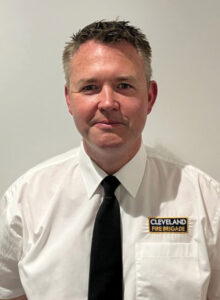
Rickard argues the fire service should act as an “anchor institution”, supporting people who are struggling and providing interventions that help prevent them from drifting into crime.
He said Cleveland has some of the highest levels of deprivation and poverty in the country: “Across Cleveland, half of my wards are in the top 10 per cent most deprived nationally. Two of my boroughs, Middlesbrough and Hartlepool, are in the top five most deprived boroughs in the country.”
Cleveland records deliberate fires at around six times the national average, according to Rickard. In 2024–25, the increase in incidents in Cleveland alone exceeded the total number recorded in West Sussex, where he previously worked.
The reasons for the high level of deliberate fires are complex, but Rickard believes the roots are clearly traced back to deprivation and poverty: “At the lower level, there are kids who are bored and set fires because it’s almost a rite of passage. Then there is also a significant criminal element linked to drug debt and violent crime.”
Community Programmes
These challenges place significant pressure on the fire service and other local support agencies. But Rickard believes community engagement can help address some of the underlying causes: “We developed a programme with a special educational needs facility near our headquarters.
“We bring in groups of 16-18-year-olds for a 13-week programme, where they see different parts of the service – from reception to fleet and IT. We also run mock interviews and at the end they deliver a presentation. Importantly, we become a reference point for them.”
Rickard said that Ofsted recently rated the Cleveland initiative as an outstanding employer-led programme: “That was an amazing achievement as we’ve just done that ourselves, we were not given funding for it, but we made it work.”
Cleveland is now developing a similar programme for care leavers, a group that is often marginalised and statistically more likely to experience poorer outcomes in adult life than those who have not been in care.
“We’re looking to bring some of that group up and if nothing else we give them a reference, an identity, help them with their CVs… that sort of thing,” he said. “The dream would be to employ one or two at the end of that programme. But whatever the outcome, they will forever have a home with Cleveland Fire Brigade.”
 Community Impact
Having an active and positive presence in the community is important to Rickard: “I’m excited about our community impact.” Indeed, Cleveland Fire Brigade has built strong local links by maintaining a very visible presence. For example, following disturbances in summer 2024 – crews helped with clean-up operations. For Rickard, being seen supporting the community in practical ways is vitally important.
He also stresses of the need to engage with all communities: “It’s about making sure seldom-heard voices are heard. People used to talk about hard-to-reach communities. I don’t believe they are hard to reach; it’s just that they haven’t been engaged with in a way that is meaningful to them.”
Through its Resilience Forum, Cleveland Fire Brigade works to bring community voices into its discussions, although Rickard thinks there is always more to do: “We need to build those community champions, and that work never stops
“Our Resilience Forum is strong and champions the community voice. But it’s similar to many things like that; if you do a survey, you often get the same people responding and being engaged. It’s about engaging with those who you don’t know about. We have a large Eastern European community in Hartlepool and we don’t engage with them in the way that I would like us to.”
A Matter of Trust
“But this all comes back down to trust,” Rickard said. “If you don’t communicate with communities, they really don’t trust you and they won’t think you can represent them. If they don’t believe you can represent them, they aren’t going to engage with you. This is why it is important for the fire service to be seen to be leaders in the community.
“It isn’t easy, but I think the name of the game is to respond not only to people’s real concerns, but also their perceived concerns. This is because if it’s someone’s perceived concern, then it’s still their concern and you’ve got to ensure that you meet those needs as well. And you only get that from listening to your communities.

“Never forget why you joined the fire service in the first place; to make your community safer. So how do you make your community safer? We had a 14-year-old girl turn up to Hartlepool Fire Station, who was running away from home because she had been sexually abused, and she knew that we had a big campaign to say that fire stations are Safe Places for people in trouble. That intervention with that watch manager and then with a female firefighter has stopped her running away from home again. That had a big impact on that individual’s life and in the community.”
Government Strategy
Rickard believes that the role of the fire service in the community should be more formalised in government strategy: “There’s so many different elements to making the community safe.
“We need to look at government strategy and the part fire can play in bringing people out of poverty and around things like education and preventing violence towards women and girls, because we’re uniquely positioned.”
He said the Fire and Rescue Service needs to do the basics right about responding to incidents and training staff but also emphasise the role that the service can play in providing solutions to community issues: “There is very little money for this. But the way you should ask for money is to say, ‘this is what we do, this is what we do well, and this is our strategy and this is how you can support that strategy.’”
If the fire service can do more in the community to address poverty and deprivation and improve resilience, it could, in turn, help keep people away from crime – as well as starting fires. Rickard believes this is perfectly possible with community engagement projects similar to the one in Cleveland.
