FIRE Magazine
Blue Sky Offices Shoreham
25 Cecil Pashley Way
Shoreham-by-Sea
West Sussex
BN43 5FF

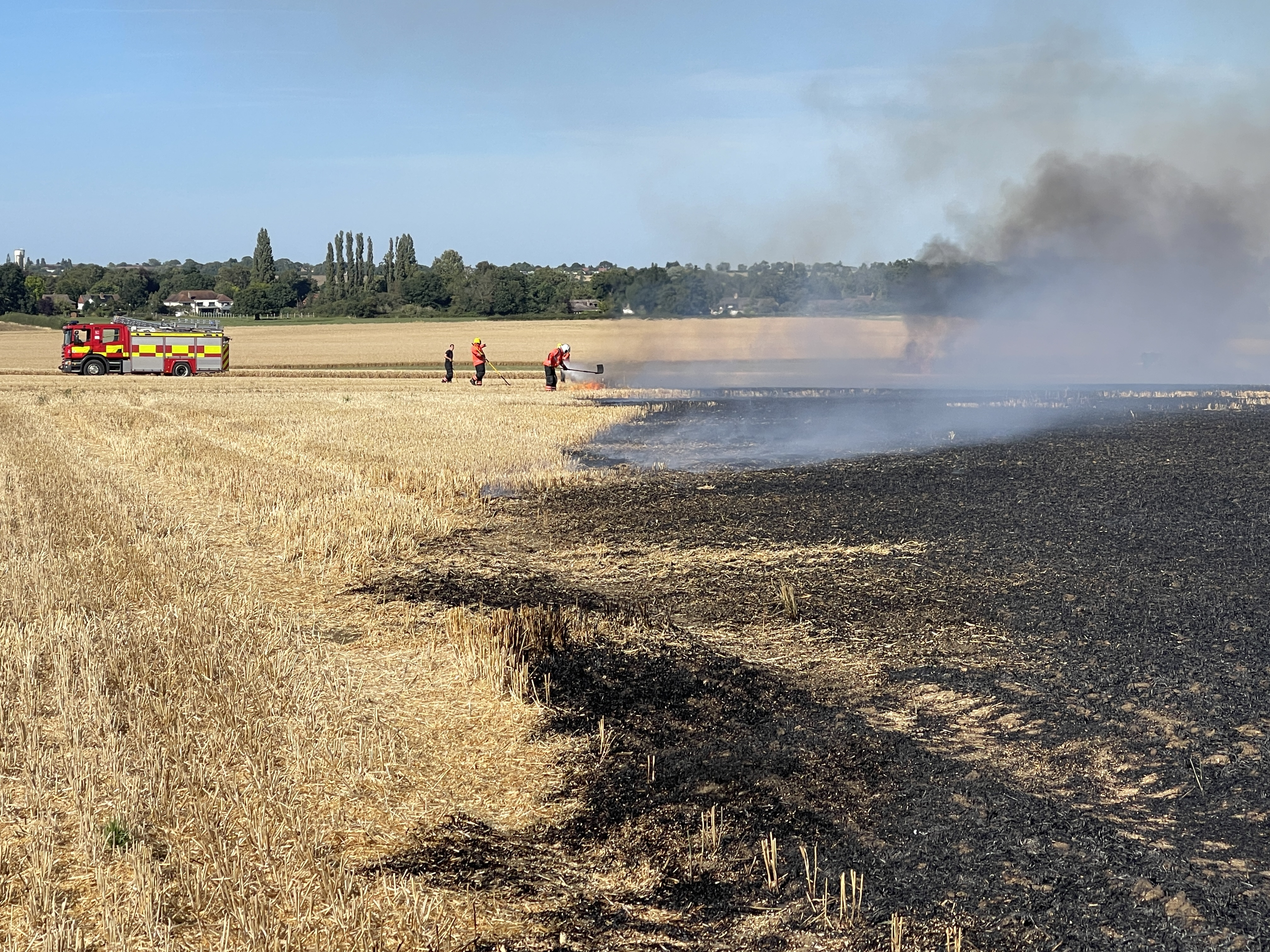
As the warm weather looks set to continue over the coming weeks, local farmers are being urged to help keep their land fire safe over the summer months.
Cambridgeshire Fire and Rescue Service is encouraging owners and staff at farms across the county to follow a few simple fire safety tips to ensure they are keeping themselves and their land safe.
Watch Commander Joe Gacon, from the Service’s Community Fire Safety team, said: “One of our biggest risks, especially this time of year, is fires on rural farmland. This is because of a number of factors, such as fire spreading quickly across dry land and securing an adequate water supply, as well as finding and accessing the correct location of the incident.
“Farm fires can be devastating, resulting in the loss of machinery, livestock, stores of hay and straw, and the destruction of buildings. A serious fire on a farm can affect the financial stability of even the most well run business.”
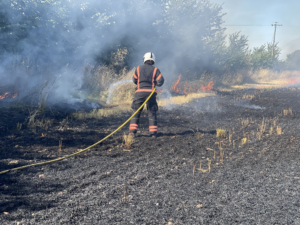 Fire crews have attended more than 100 fires involving farms over the last two years, with more than half occurring during the summer months (June-August). There have already been 16 fires this year, some of which saw significant damage to large areas of land and surrounding vegetation.
Joe added: “Farms are at a high risk of fire because there are often lots of combustible materials stored in or around agricultural buildings. Farms are also often in isolated locations, which may have poor water supply. This makes farms much more vulnerable to fire getting out of control, especially in summer when hot and dry weather increases the risk of wildfires spreading.”
Rural firefighting not only makes up one of the Service’s biggest risks, but it also presents a significant challenge to get a water supply to an emergency incident. The Service has taken innovative approaches to mitigating this, such as adding a purpose built connection coupling to every fire engine in the county, allowing them to access the farm’s water supply.
Joe said: “Across the county there are many farms that utilise tanks that store rainwater, which can be used for many purposes in day-to-day farming. Known as rainwater harvesting tanks, these effectively collect rainwater and store it, which is useful especially in rural areas where lack of a water supply is an issue.
“It is not just water supplies that farmers can help with. Other resources, such as telehandlers, can be offered by the farm in an emergency. This information can be added to the data terminals in the fire engine so crews are aware of the extra things they might be able to use and access them quicker.”
A video showing how rainwater harvesting tanks can support fire crews can be found on YouTube.
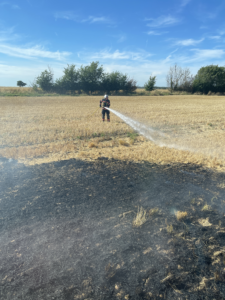 Farms are particularly vulnerable to deliberate fires and arson due to their isolated location, open boundaries, readily ignitable hay and straw stacks often making them easy targets. There have been some recent examples of this in the Peterborough area where multiple fires have been deliberately set, causing significant damage.
Joe added: “We do tend to see an increase in calls to fires during spells of warm weather, which results in our crews spending significant time at incidents that could be avoided. This is concerning as the crews are committed and cannot respond to other emergencies, but also for local residents being but at risk because of deliberate fire setting. Any fire, no matter how small, can quickly get out of control and spread, endangering those around and the fire crews that come to tackle it.
“There are things farmers and residents can do to help prevent these fires from happening. Those with children can speak with them and ensure they know the risks and dangers of fire, especially with the school summer holiday period not far away. Also, making sure lighters and matches are kept well out of reach of children, as well as making sure they stay clear of disused or derelict buildings, can also make a big difference.
“Also, consider putting in place a fire break in place for standing crops, especially if they are adjacent to farm buildings storing fertilizer and other dangerous substances such as diesel, as well as livestock.
“We do urge residents to make sure they call 999 to report a fire, even if you see a small sign of smoke so our crews can respond quickly and stop it spreading.”
Top tips to be prepared in case of fire:
Do not store flammable items near livestock.
