FIRE Magazine
Blue Sky Offices Shoreham
25 Cecil Pashley Way
Shoreham-by-Sea
West Sussex
BN43 5FF

Darryl Ashford-Smith
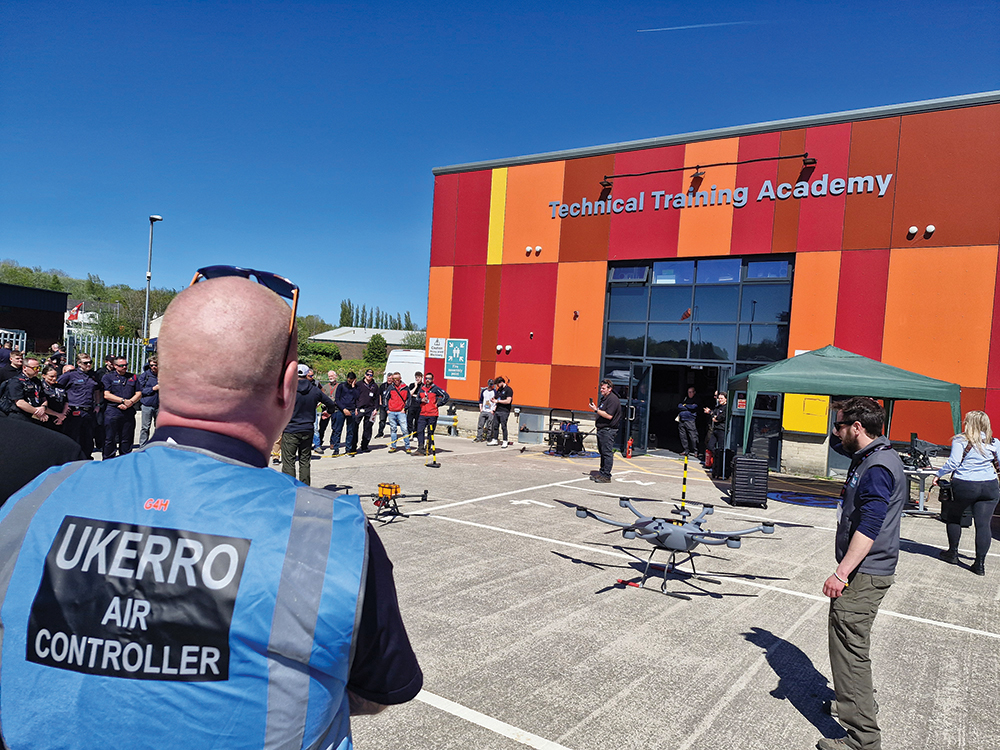
Last month, first responders gathered for the UK’s largest event focused on robotics and emergency response operations. The summit brought together those who design and build robotic systems with the professionals who deploy them in the field. The aim was to improve and accelerate innovation and ensure the right technology reaches the people who need it most.
At its heart, first responders are front and centre of the event. And some 250 delegates attended, representing more than 35 manufacturers and organisations globally. This included speakers and attendees from Australia, Hong Kong, the US and across Europe.
The guest speakers and workshop facilitators were selected from organisations and countries leading in robotics and technology. Each of them brought practical insight into how they operate, offering examples that showcased best practice and highlighted clear opportunities for innovation across the UK.
One example was Russ Turner, Fire and Rescue NSW, Australia, chief remote pilot and team Leader, Aviation. With 220 pilots and 120 platforms, Turner leads one of the biggest drone capabilities in the world in an area that deals with events such as wildfire or flood response, bringing invaluable lessons learnt to the UK.
Another example was Stewart Gibson, of Galloway Mountain Rescue Team, former team leader and now secretary of the search and rescue aerial association, Scotland (SARAA). SARAA draws its pilot from Scottish Mountain Rescue Teams. He presented how SARAA has changed the way it searches for missing persons using AI and anomaly analysis software.
The event ran a similar pattern each day with guest speakers and a range of workshops, demonstrations and networking. All of this involved vendors displaying what they offer regarding hardware and software. Some examples of the workshops delivered were drone use in urban search and rescue operations, law enforcement-related search and internal flying. Demonstrations included a range of use by robotics including ground, on-water and underwater capabilities.
A common thread of the UKERRO team was a measurable way of testing the proficiency of the operator and capability of the robots. This in turn means that there is a way of quantitatively measuring whether robots and robot operators are capable and reliable enough to perform operational tasks.
To this effect, UKERRO invited representatives from the National Institute of Standards and Technology (NIST – US Department of Commerce) to facilitate the test methods as a way of familiarising attendees with the system.
A range of timber framed rigs, built with small buckets with a sticker inside them, showed a range of information that the operators had to gather by moving in a set pattern or carrying out a certain manoeuvre. These tests are transferable to real-life scenarios and can be attributed to almost any type of search or other robot functions as the system is flexible.
This is one example with which UKERRO will enhance the standard and innovation within the UK robotics industry and in operations of the emergency services and volunteer search and rescue teams.
To conclude, the team was justly proud to be able to facilitate such an event that makes a difference to the public and to the safety of first responders. So many conversations happened and the highlight is that everyone is willing to share their knowledge for the greater good.
And the feedback said it all: “We see the event as a critical platform for bridging the gap between cutting-edge robotics and real-world operational use,” said James Brown, NextGen Ri. “It’s not just about showcasing technology – it’s about bringing together end users, innovators, and decision-makers to explore how these systems can genuinely enhance safety, efficiency, and capability within emergency services.”
Stew Gibson, SARAA – Scotland: “Presenting at the event wasn’t just about sharing what we do – it was about showing where operational reality is taking us. The focus was simple: how we’re evolving search through a braided approach – combining ground teams, aviation, drones, and tools like Focalise AI and MRMap into a single, coordinated system. This wasn’t theory. It’s built from real incidents, real limitations, and real outcomes. For me, it marked a shift – from operating within a system to helping shape where it goes next. Thanks to everyone who challenged, contributed, and pushed the conversation forward.”
The UKERRO team will be attending the robotics stand at the Emergency Services Show September 16-17.
