FIRE Magazine
Blue Sky Offices Shoreham
25 Cecil Pashley Way
Shoreham-by-Sea
West Sussex
BN43 5FF

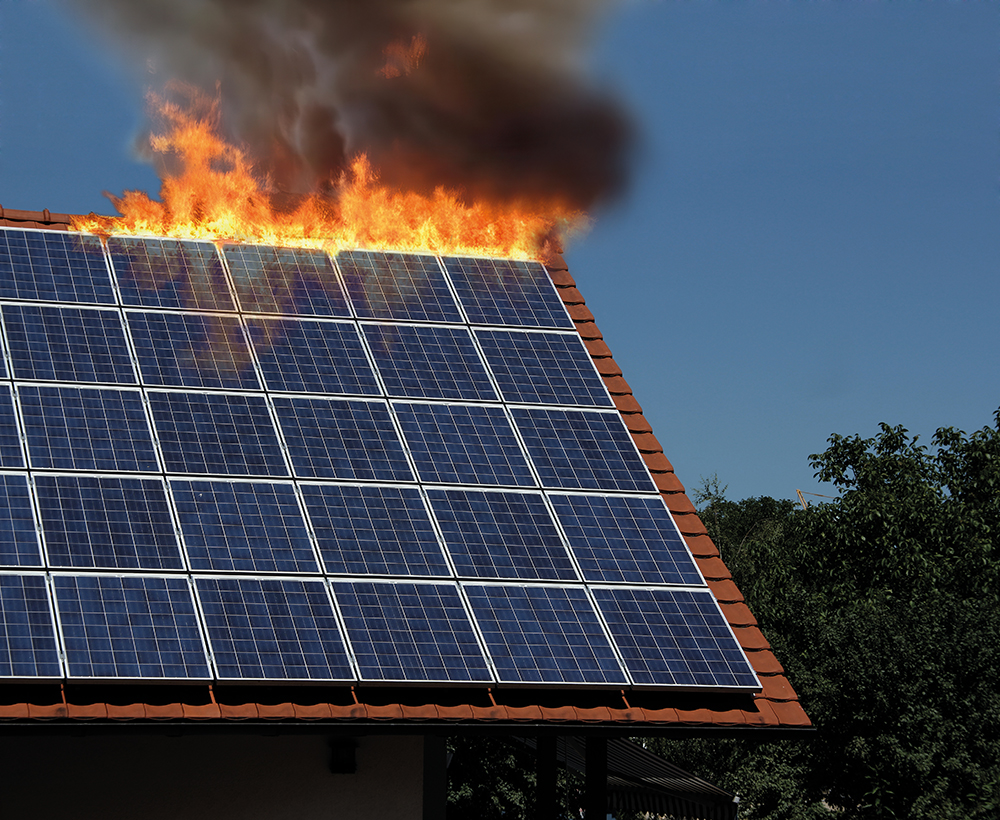
In the bleak midwinter, as daylight slowly begins to return after the December 21 solstice, it can be hard to imagine the better weather ahead. Yet thinking about spring and summer is a national preoccupation. In the UK, we are accused of being obsessed with the weather. Increasingly, however, this seasonal obsession has consequences, particularly when rising sunshine hours dovetail with the rapid expansion of solar technology and its associated fire risks.
Evidence published on December 17, 2025, by the meteorological office provides a compelling argument that 2025 was the sunniest year since records began in 1910. The UK recorded 1,622 hours of sunshine, beating the previous record set in 2003. The spring period was exceptional. Scotland had its second highest sunniest year and Wales its sixth.
Clearly, last year was unusual for sunshine. Given the vagaries of climate change it is right not to suggest that statistics from a single year are representative of a serious and consistent shift in weather patterns. As far as the British are concerned such evidence does not make it likely that they will change their travel plans. The hot spots of Europe will still draw them on holiday, at least until they become intolerably hot as a side effect of climate change.
Where these statistics do matter, however, is in how sunshine is increasingly harnessed as an energy source – and the new risks that accompany its widespread adoption. In an era where one major agenda for our political leaders is the issue of net zero and climate change, these statistics provide a narrow snapshot of the potential for sunshine to be used as a renewable source of energy alongside the adoption of technologies that harness wind power.
While this sounds great on paper it does not necessarily make a slam dunk case for the wholesale adoption of renewable energy sources. One significant issue with regards to wind energy is getting the electricity that has been harnessed to the consumers, which are often some distance away. Significant investments in the National Grid are required to re-distribute this energy source. It also has the potential to further stain the countryside with yet more pylons, on top of the ever-increasing numbers of turbines which also cause visual pollution.
While some people in remote areas purchase their own domestic wind turbines to supply electricity for their own dwellings and then offload any spare capacity to the National Grid, the idea of domestic wind turbines appearing on every house would surely trouble local planners.
A further issue is what domestic users do when the wind is absent – or blowing too hard for turbines to operate. Backup power is essential, and battery storage is costly, short-lived, and offers little real financial incentive. Industrial users, however, may see clearer benefits, particularly where on-site turbines can offset a portion of factory electricity costs.
Solar arrays, by contrast, have been adopted at speed – in part because they are perceived as lower-impact, lower-risk and more visually acceptable. Solar arrays, however, provide a different and viable option and more readily blend into the visual background. Government grants have helped encourage people to examine the case where capital returns outweigh the initial, often subsidised, investment. It goes without saying not every house is a viable site for solar panels.
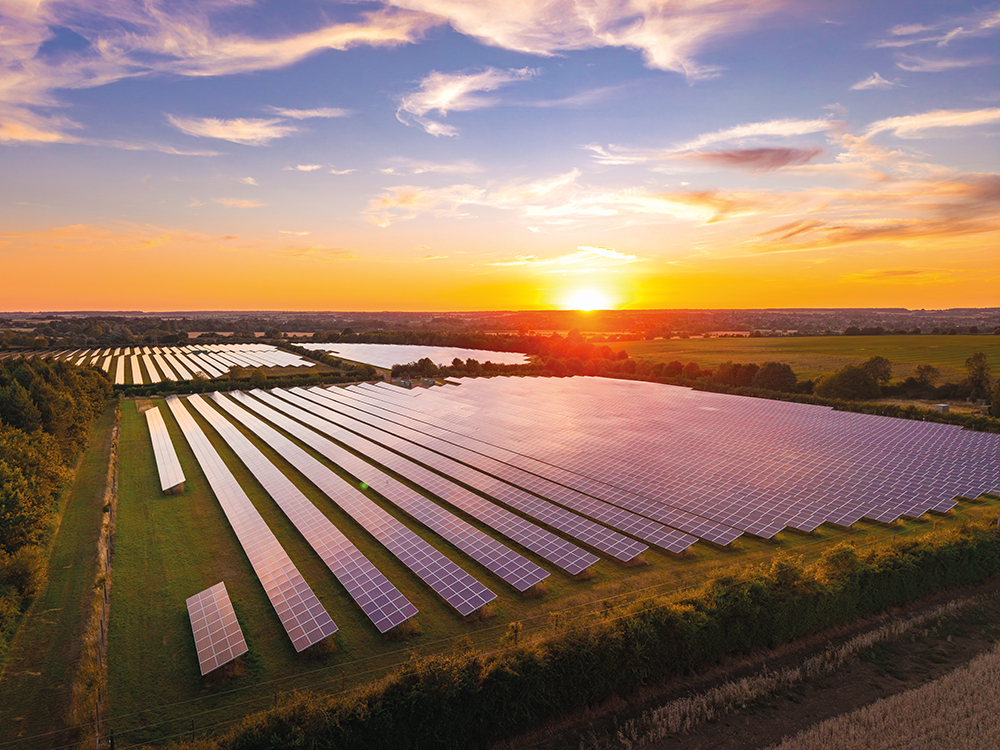
A number of factors must be weighed up before any capital outlay is made. 2023 saw the fastest rate of installation since 2015, with new homes increasingly adding to the installed base. This shows how solar arrays have become popular since the numbers crossed 1 million in late 2020.
This is notwithstanding the investment in ground-mounted solar arrays that now cover an estimated 52,000 acres of the UK – the equivalent of approximately 24 million homes with an average installation of nine square metres. A total acreage that is likely to increase. With this expansion has come a measurable increase in fire incidents. By way of comparison 17 fires occurred at ground-mounted arrays in 2024. This contrasts with 97 in domestic houses and 37 in commercial and industrial buildings.
Despite this increase in solar installations, the UK continues to lag behind several European countries. The Netherlands has driven high uptake through supportive government policy, while Greece, Spain and Malta benefit from consistently high sunshine hours. Germany now has the largest solar market in Europe, and Hungary has made solar power a central pillar of its energy supply, becoming a standout case across Western Europe.
Across the continent, 56GW of new solar capacity was installed in 2023, driven in part by efforts to reduce dependence on Russian gas following the invasion of Ukraine.
In 2025 the surge of installations hit an all time high when the total surpassed 203,125 which had been recorded in 2011. The point at which the rate of installations started to grow quickly. A rate that new housing regulations, people’s interest in their green credentials and lower solar costs have all helped encourage.
Counties where this is occurring include Somerset (3,741), Cornwall (3,726), Wiltshire (2,545) and perhaps slightly surprising North Yorkshire (2,780) installations. Certified home battery installations have also grown to store power not used for domestic consumption by 122 per cent to just under 60,000.
Solar panels are now a common sight in towns and cities across the UK. An estimated 1.85 million houses, out of 28.6 million (6.3 per cent) had installed solar panels in early 2025 providing an installed base of around 18 gigawatts (GW) of power. This averages out at 10 kilowatts (KW) per house where typical installations generate 3-4KW of electrical power.
This rapid adoption of solar power technologies is not all good news. Any system that captures the energy of the sun, which of itself is variable, is likely to have an associated risk of fire – particularly where installations are ageing, poorly maintained, or incorrectly fitted. Specifically, if the system is installed and not properly maintained. A number of recent high-profile incidents have provided evidence of the problems that can arise.
Firefighters mobilised from Dorset fire and rescue services deployed foam to fight the fire. There were no casualties as the building was successfully evacuated and the hotel occupancy was low, given the time the fire broke out at 2pm in the afternoon. In total nine square metres of the roof suffered damage. The interior of the building was unaffected. For the DFRS this was all in a day’s work.
The incident and several others do raise an important question. As overall rates of fire events associated with domestic properties drop, due to a raft of fire prevention measures that are now in place, is their any indication a greater uptake of solar installations increases the number of fires that must be attended? Current statistics suggest that the rate of fires associated with solar panels is now one every two days.
In analysing data that is publicly available there is some evidence that a number of installations that were made in the first wave of the take up of this technology, 2013-2015, are showing their age. Electrical systems, in general, are known to suffer from the reliability ‘bathtub’ curve and many over 10 years old may be at increasing risk if not carefully maintained.
To date, the statistics suggest a rate of fires in solar powered homes is 0.1 per cent. While this does not sound high, if the installed base increases and the rate of fires is maintained the numbers will grow. There were three fires recorded in 2010, before the take-off in installation totals.
This rose to 20 in 2015 and 60 (a three-fold increase) by 2021 with 66 being recorded between January and July 2023. In 2024, a supermarket chain suffered a fire associated with solar panels at one of their warehouses in Peterborough.
In the same year, Northumberland County Council disconnected solar panels at 80 schools and numerous public buildings due to an event that occurred at a local school. Clearly, the totals are on the rise causing fire chiefs to warn that rates of fires are rising rapidly across the UK.
As the number of solar panels has increased so has the regulatory environment that governs how they are installed grown. Standards are being developed but it is important that homeowners can be assured these are being adhered to by those professing the capabilities to make safe installations. Developments associated with solar arrays have seen devices some to the market that have reduced fire risk.
Mitigation of such events is a priority for the industry and for insurance companies that are also starting to note the uptick in events, as reports suggest the number of incidents is outpacing the rate of installations. This adds weight to concerns about potential unintended consequences arising from the perceived race to achieve net zero.
As the solar panel industry develops there are concerns that the market becomes more competitive and manufacturers cut corners with the materials. Regular inspections to assess potential weather damage to components are also vital, which can be difficult for some homeowners. In many cases this is a key cause of fires.
Buying roof-based surveys to determine if any weather damage has occurred leaves some vulnerable people open to exploitation by rogue operators. Given this, and the fire and rescue services’ excellent fire prevention record, it is possible to suggest that a new free service to the public be assessments of fire risk from roof-top installations.
This may be an idea some fire chiefs, in areas where high numbers of solar panels are installed, might want to adopt. Registration of the installation of solar panels into a database would facilitate such a service, especially since the government has mandated that all new homes have solar panels by 2027.
