FIRE Magazine
Blue Sky Offices Shoreham
25 Cecil Pashley Way
Shoreham-by-Sea
West Sussex
BN43 5FF

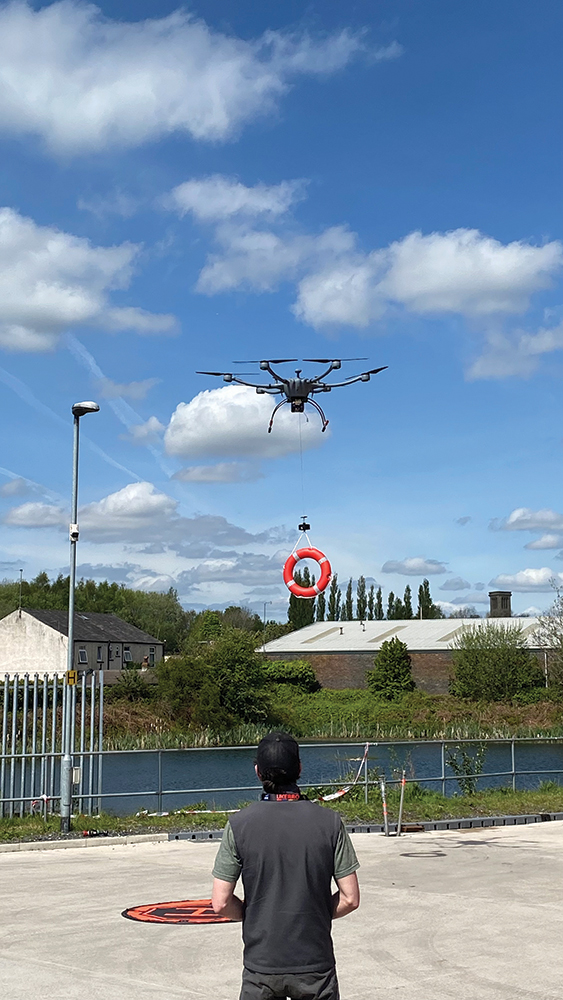
When Darryl Ashford-Smith and Lee Newman formed their working partnership, UK Emergency Robotics Responders Org (UKERRO), they were both working in emergency services at extreme ends of the UK.
Their ideas around drone technology brought them together through shared interest and difficult circumstances that still resonate with both of them today.
For Newman, the incident that changed everything was the Grenfell Tower tragedy, while for Ashford-Smith it was the years in the armed forces, the fire service and then in Scottish Mountain Rescue.
Newman has 28 years’ service in the LFB but the reason behind his adoption of drone technology occurred in June 2017, as he watched the Grenfell Tower disaster unfold. One particular incident was the catalyst for everything that followed – Kent Fire and Rescue Service used their drone for situational awareness in the post-fire phase, which aided the USAR personnel trying to make the building safe.
“I was given the drone project in the London Fire Brigade after the Grenfell Tower fire,” Newman recalled. “After Grenfell a few recommendations came out of the post incident review; one was for using drones.”
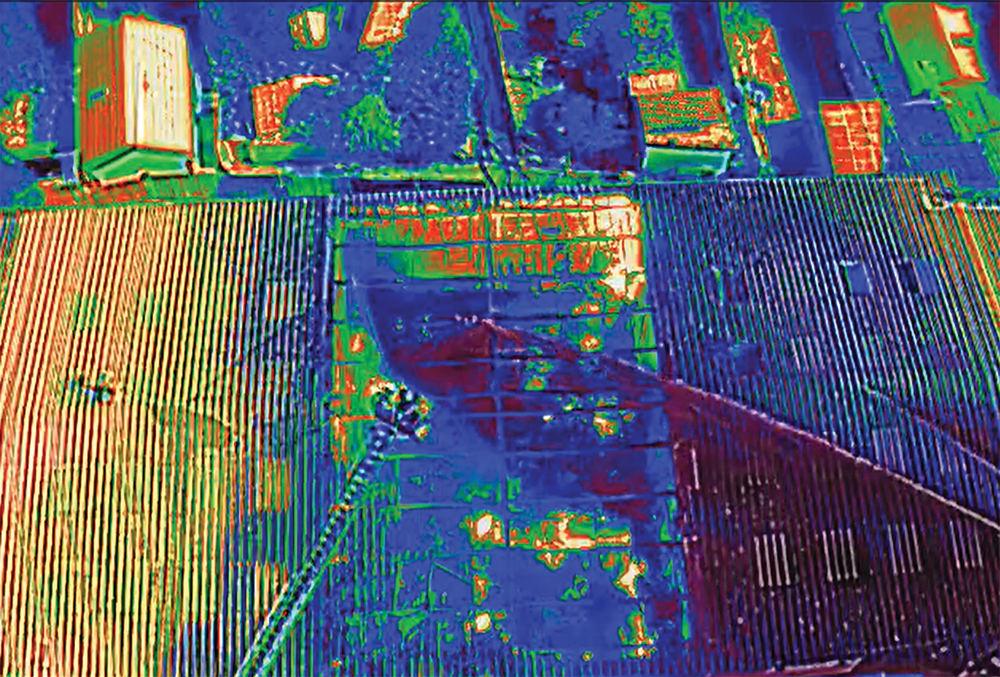 This was new territory and Newman had to do a lot of research and design new processes and procedures. It was painstaking work, meeting different people and companies, running demos and finding the best fit for the new drone capability.
Newman admitted he became immersed in drone technology: “Through the following years I’ve been working with drones and spoken to a lot of companies; the drone world is really small. I spent most of my working hours on this and realised that everyone knew each other – the events I attended or organised ended up becoming family affairs.”
Meanwhile, in the Scottish Highlands, an oddly similar story was unfolding in the mountain rescue service. Ashford-Smith joined the drone team when it launched in 2018 and is now Chair of the Search and Rescue Aerial Association-Scotland and Training Officer of the Scottish Cave Rescue Organisation.
“I worked my way through the training officer role and chair role,” Ashford-Smith said. “Drones and AI can transform searches for missing people, identifying things that humans can’t see.
“On my first call out I quickly realised that we didn’t have any procedures. There was no one we could approach for guidance, so we developed procedures very quickly.
Two years ago, Newman and Ashford-Smith – both with the LFB as the common link – decided to get together as partners in pushing the use of drones by emergency responders.
Newman: “Other countries have organisations dedicated to emergency response using drones, but we haven’t got one. Darryl was currently on a Churchill Fellowship to research and encourage use of drones in the UK so it made perfect sense to form an organisation..”
The result was UKERRO – the UK Emergency Robotics Responders Organisation – which is a not-for-profit organisation that connects drones and robotics operators across the fire and rescue, search, police and coastguard services.
Their first UKERRO event last year was largely built on minimal resources – but their faith in what they were doing paid off. Newman and Ashford-Smith secured a venue for free and opened registration to attendees without charge.
Newman: “We begged and borrowed and went cap in hand to various people. We got an event location for free; told the vendors and attendees it was free. We had a big sign-up, but only about 50 per cent of the people turned up on the weekend.”
To help with the event, the partners asked colleagues from abroad to publicise the benefits of drone technology in search and rescue. International speakers included drone educators from the US who run one of Florida’s leading first-responder drone conferences and Europe’s leading specialist in indoor flight specialist.
“The feedback we got from vendors was really positive and some said that it brought something different to the event table. Before we launched the UKERRO summit in 2025, I reached out to David Brown from the ESS for advice and support on how to set up an event.
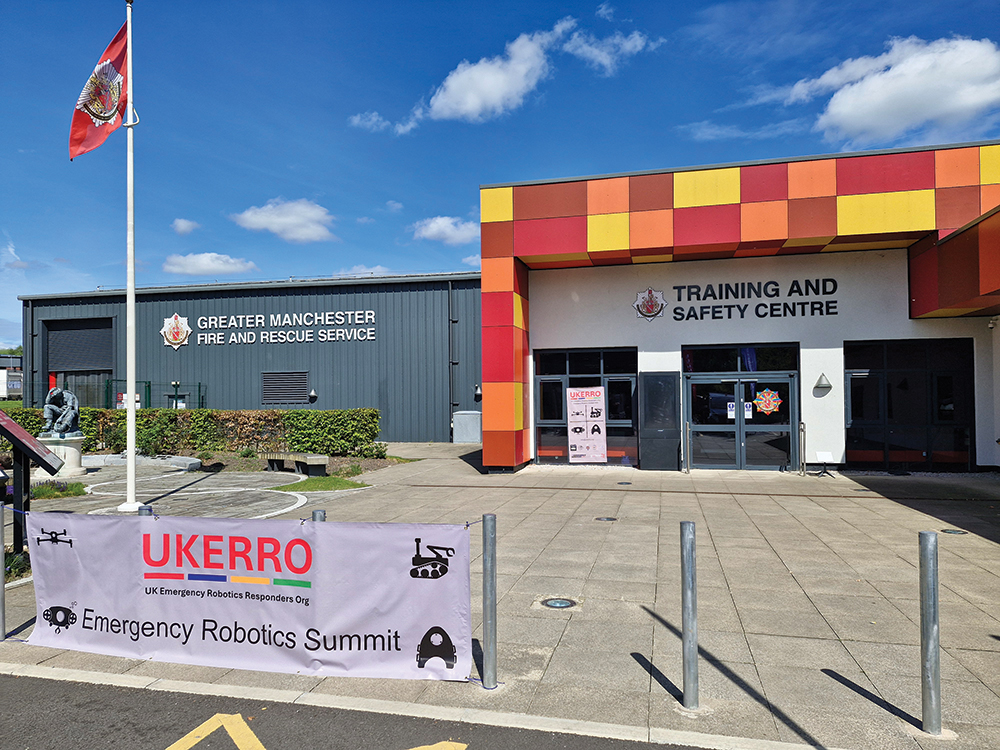 “Through this friendship and the work we have done for each other since our first event, The Emergency Services Show are now a key supporter.”
The two organisations have now forged a working partnership, with UKERRO running a robotics showcase alongside the Drone Rules drones cage at the ESS event for the second-year running.
“Anyone can start an event, but it’s getting credibility for that event. I wish I had the UKERRO event when I started my drone project in London – it’s like the one-stop shop. You’ve got the training providers, the drone and software providers and it’s just all there. If you’re in that world, it is all under one roof.”
For this year, the event’s registration costs a nominal £20 for attendees; not to make a profit, but to ensure professional commitment. “From the get-go, Edinburgh Drone Company were with us – and they’re our platinum sponsor. DJI – the world’s dominant commercial drone manufacturer – our gold sponsor; Rosenbauer, the Austrian emergency services giant, is silver and Airhub have confirmed bronze.”
Among the international speakers confirmed are Russ Turner, who leads New South Wales Fire and Rescue’s drone department in Australia, and Polish Mountain Rescue, whose high-mountain work has produced some of Europe’s most advanced technical rescue drone procedures.
For the future of UKERRO, the partners are now looking at more individual events. The idea is for services hosting drone events at their own training facilities – keeping costs low and helping to sell the idea to organisations beyond just search and rescue.
Moreover, Newman and Ashford-Smith have longer-term ambitions: “We would really like to have this as a travelling event; visiting various parts of the country and making it accessible to all.”
Demand for the April event is already outstripping available demonstration slots. For the event in Greater Manchester, UKERRO is on track for 130 to 140 attendees – double last year’s numbers. That growth represents something meaningful in a community where everyone already knows everyone and the conversations that need to happen have simply been waiting for the right time and place.
Newman: “The biggest thing Darryl and I are pushing is that it’s an event for practitioners, built by practitioners. It’s exactly what we want to see at an event. A lot of the people in that field are practical – they want to see it and play with it. I live and breathe this – every day I think about it. But when I’m at the event and I hear comments going, ‘I really like that,’ it is all worth it. That’s why we do it.”
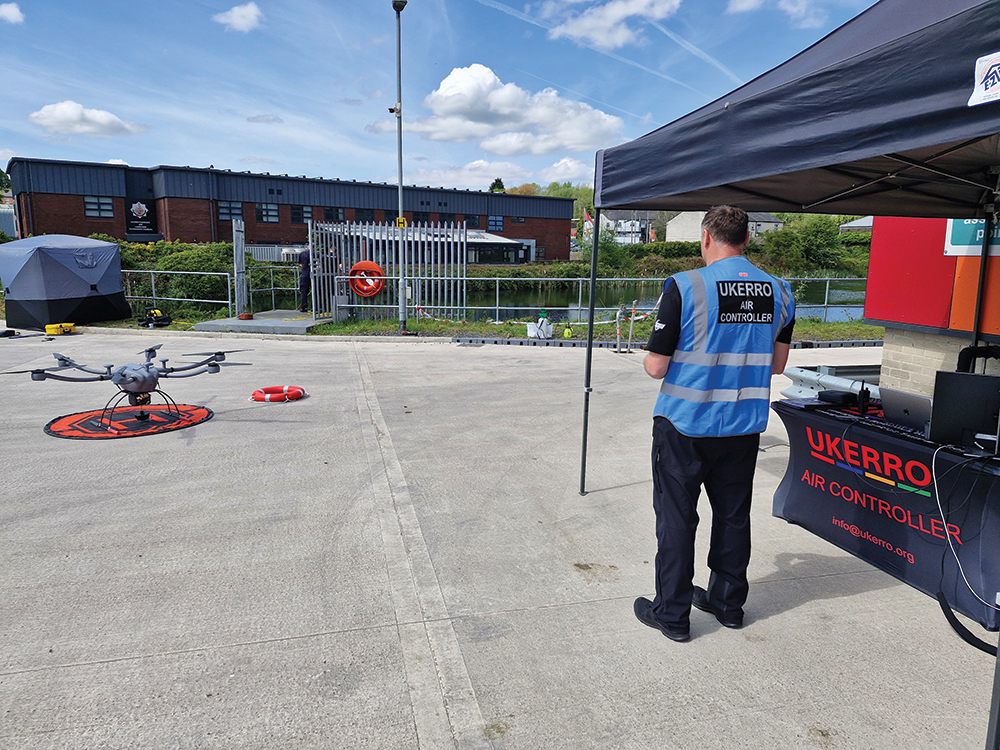
UKERRO 2025 takes place on 29–30 April in Greater Manchester.
 For Newman one of the most memorable examples of drone technology in action was early in London’s drone programme:
“A call came in about a leisure centre under renovation. Someone nearby reported seeing cylinders on the roof. In emergency services terms, this means a big retreat; clear 400 metres, shut the roads and railways trains, shut down all bus networks; mass evacuation.
“We then put the drone up and it beamed down pictures of the roof.
“The cylinder turned out to be rolls of asphalt; roofing felt. We didn’t need to send a cylinders report; we didn’t have to close everything down, which would have costs millions of pounds. That’s situational awareness in a nutshell. That’s what each service could attain by just getting one drone.”
“In some cases, such as the indoor incidents, you could put drones and robotics into places you wouldn’t want to put firefighters, not risking their lives. The question for all services should be, why haven’t we got one? Because every service should have one – it’s not about cutting firefighters, it’s about protecting them.”
For Ashford-Smith, the highlands and islands of Scotland – and the caves beneath them – present different but equally powerful challenges. His teams are now running four different AI and visual recognition systems, identifying features and anomalies that rescuers cannot process fast enough: “We are using AI and visual recognition systems that can detect things that humans can’t, because we just can’t see everything.”
