FIRE Magazine
Blue Sky Offices Shoreham
25 Cecil Pashley Way
Shoreham-by-Sea
West Sussex
BN43 5FF

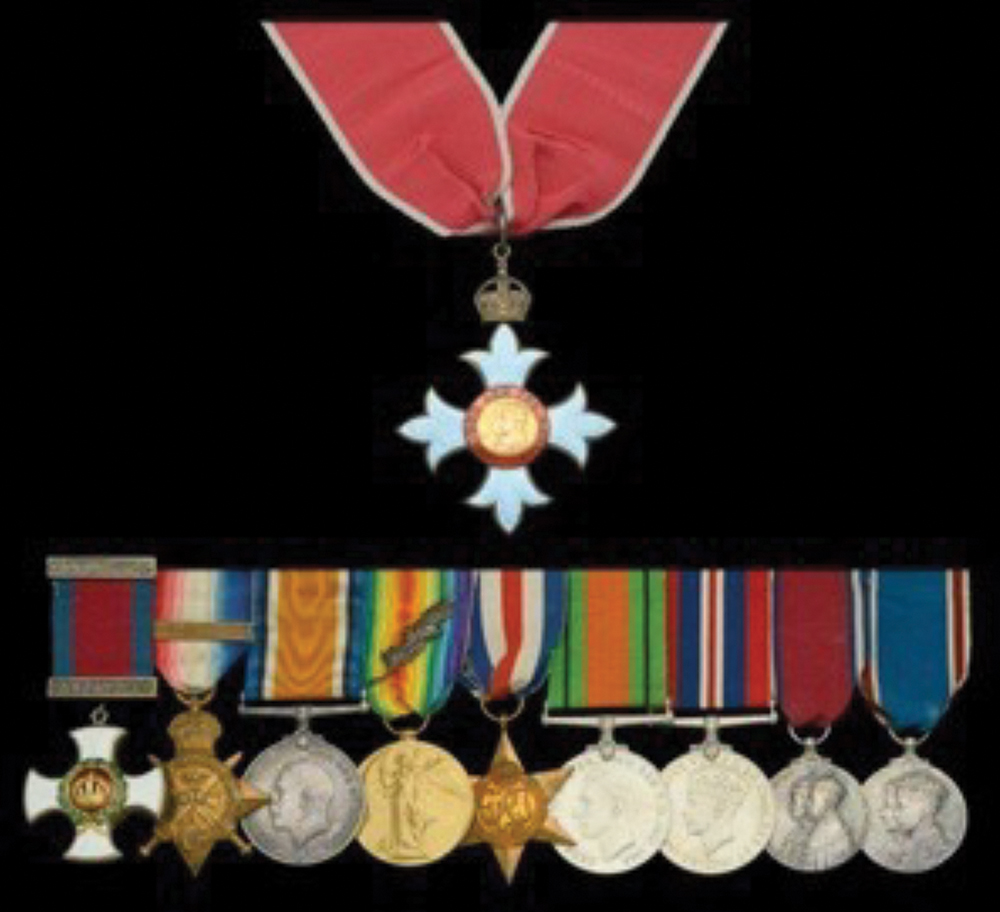
A significant medal group awarded to Major Frank Whitford “Gentleman” Jackson, the decorated Great War veteran who commanded the LFB during the London Blitz, was offered for sale at Noonans Mayfair on March 18. Expected to fetch £20,000-£30,000, the medals were sold by his grandchildren for the sole benefit of Fire Fighters Charity, originally established by Jackson in 1940 with a £24 donation.
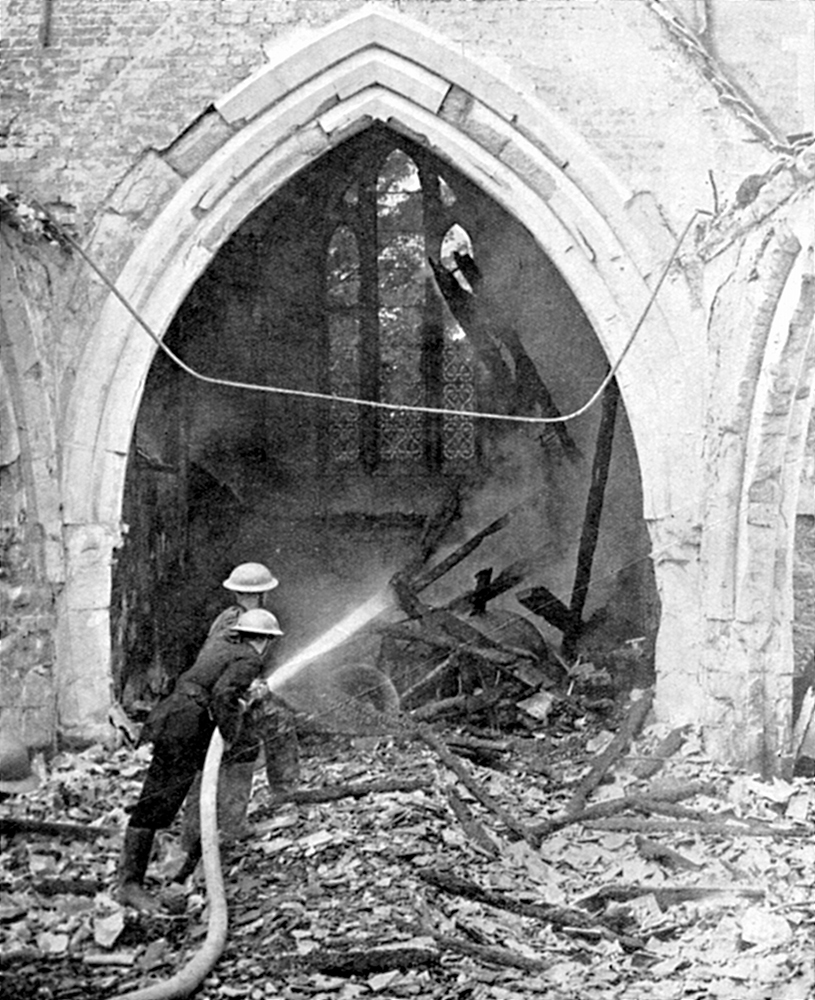
Co-ordinating the battle against the firestorms and devastation in the capital, Jackson, who had risen through the ranks to take up the role on the eve of the Second World War in 1939. Jackson faced numerous perils, having been ordered directly by Winston Churchill, during the night raid of December 29, to protect St Paul’s Cathedral at all costs.
To have lost such an icon as St Paul’s to enemy action would have had a devastating effect on the public morale. A large bomber force arrived over London just after 6pm and saturated the City and the East End with incendiaries and high explosive bombs; serious fires occurred in the vicinity of St Paul’s Cathedral, the great warehouses in the Minories, London Guild Hall and Moorgate. St Paul’s, although ringed by fire and destruction, escaped virtually undamaged; the most spectacular air-raid of the war, referred to as the “Second Great Fire of London”, killed 160 civilians and injured 500. London’s fire service lost 16 men and more than 350 were seriously injured.
As Churchill said at the height of the Blitz, when announcing the award of Jackson’s CBE for services during the London Blitz in 1941, “Major Jackson’s is the biggest job of its kind in the world. His is the brain which controls the use of all London’s fire-fighting resources, from the big stations down to the smallest of its 3,000 appliances. He is the leader of an army of 33,000 gallant men and women.”
Nimrod Dix, deputy chairman of Noonans and director of the medal department, said: “Eighty-five years on, The Blitz remains the single most devastating and sustained attack on mainland Britain in recorded history. Estimates vary, but some said it claimed the lives of 43,500 civilians – around half the total who died in the entire war – and made one in every six Londoners homeless.
“The bombing and firestorms that resulted led to the damage or destruction of 1.1 million homes – two million when other cities were taken into account. Vital infrastructure, including docks and railways, were also destroyed. The nightly bombing began on September 7, 1940 and continued unbroken for 57 days. The Blitz lasted until May 1941, the final night of devastation raining down on London on 10 May.”
Dix said the LFB, aided by the Auxiliary Fire Service, was at the heart of the firestorms that raged across the capital over those eight months. They dealt with countless incendiary devices that had not exploded on impact, while also fighting out-of-control fires in soaring temperatures, often with limited or unreliable access to water to douse the flames.
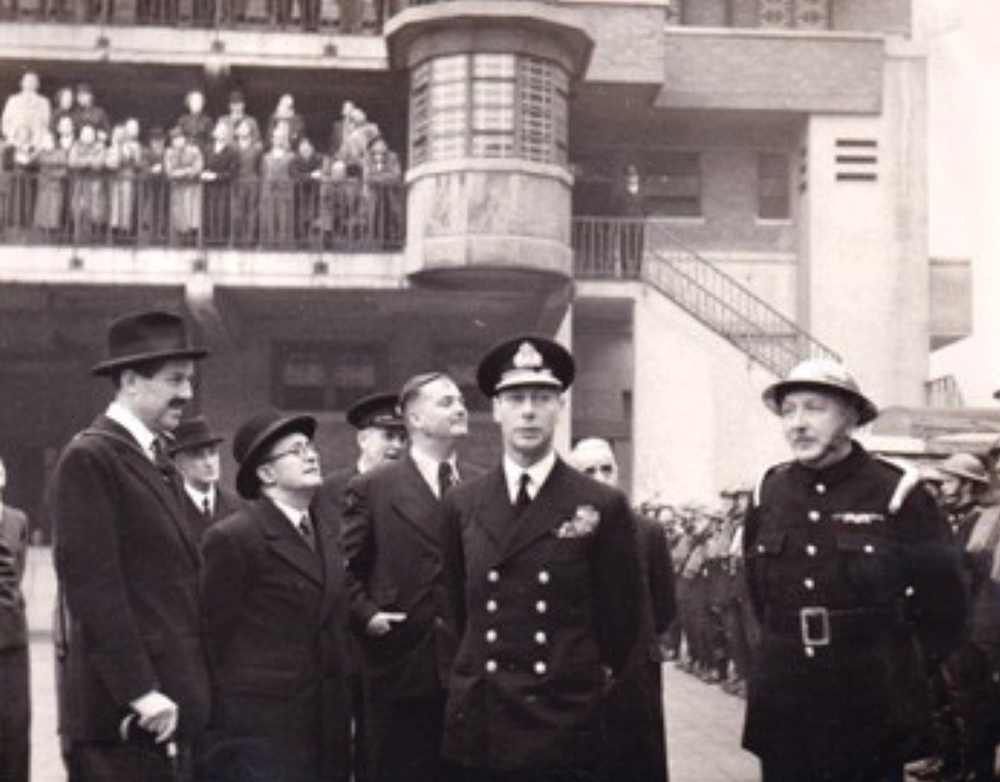
“The London Fire Brigade estimates that in the first 22 days of The Blitz alone, its men had to tackle 10,000 fires. Buildings would collapse around them as the bombing continued and factories and warehouses hit by bombs could add to the peril and conflagration as their inflammable contents caught alight. Meanwhile, returning to base gave no let-up as the bombers targeted fire stations too, and communication lines broke down hampering efforts further. By the end of The Blitz, 327 London fire fighters had lost their lives – the national total was 997. The largest single loss had come in April 1941, when 34 died tackling the devastation at the Old Palace School sub-station in Poplar. It is still the largest loss of life from a single incident for the service in history.”
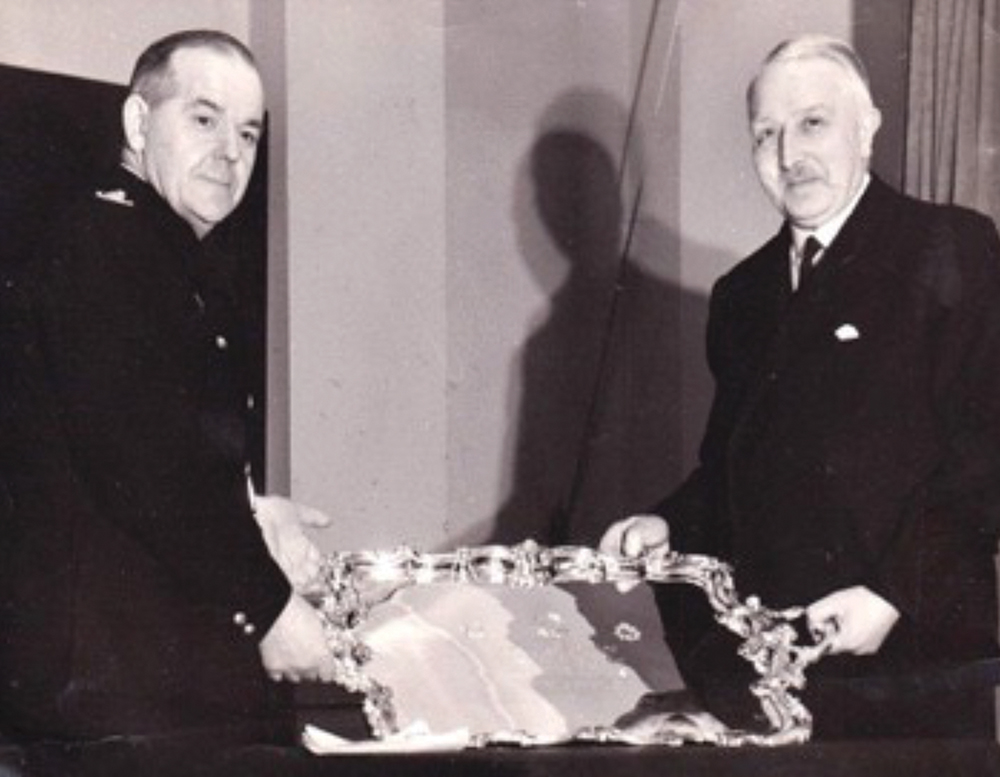
Jackson’s grandson, Frank W Goulding, added: “My sister and I are delighted to put forward for auction our grandfather’s medals and silver tray. It seems fitting that the charity he helped to set up just prior to the Blitz should benefit from their sale.”
Ellie Rocks, director of fundraising at Fire Fighters Charity, said: “We are deeply honoured that Major Frank Jackson’s family have chosen to support Fire Fighters Charity through the sale of his medals.
“This remarkable gesture ensures that Frank’s lifelong commitment to the fire services community lives on, helping its members manage the impact of service, recover from injury or illness, and find strength through life’s challenges.
“We are incredibly grateful to his grandchildren for this meaningful tribute, which will make a real difference to our fire family across the UK.”
Frank Jackson was born on 23 June 1886, at Strood, Kent. After qualifying for the civil service, records show that he worked as a clerk in the Education Department of the London County Council. He was a founder member of the Westcombe Park Rugby Club, and captained the team for several seasons, later becoming club President, a post he held until his death aged 68 on June 16, 1955. He was interred in ‘Fireman’s Corner’ in Highgate Cemetery, the last firefighter to be laid to rest there.
